
Microdermabrasion vs Dermaplaning: Which Fits You?
Choosing an exfoliating treatment is easier when you start with your skin goal, not a promise of instant transformation. In Garwood, NJ, you may be comparing two approaches that sound similar but use different tools and emphasize different concerns. A thoughtful consultation can help you discuss texture, facial hair, sensitivity, current products, and what kind of aftercare feels realistic for you.
In simple terms, microdermabrasion vs dermaplaning comes down to the method of exfoliation and the result you want to prioritize. Microdermabrasion uses an exfoliating device to gently resurface the uppermost skin layer. Dermaplaning uses a specialized blade or razor to remove surface skin and may also remove fine facial hair. Neither option is automatically better for every person. Both treatments are represented in Boho Chic Beauty's current Garwood, NJ skincare offering. A consultation can help match the approach to your goals and confirm current details before booking.
The most useful comparison begins with understanding what each tool does to the skin, then connecting that difference to your own goals and comfort. From there, you can ask more informed questions before choosing a provider or treatment.
How Microdermabrasion vs Dermaplaning Differs
Microdermabrasion and dermaplaning are both skin-resurfacing approaches, but they use different tools and focus on different types of exfoliation. Neither is universally better. The more appropriate option depends on your skin goals, comfort, current concerns, and the guidance of a qualified provider.
Different tools, different exfoliation focus
Dermaplaning uses a scalpel or razor-like instrument to carefully remove the uppermost layers of skin. Because the tool passes across the surface, it may also remove fine facial hair, sometimes called peach fuzz. That hair-removal effect is temporary because hair grows back. The approach may be considered when someone wants to address surface texture or the appearance of certain skin imperfections, but realistic expectations matter.
Microdermabrasion uses a specialized exfoliating instrument to gently abrade the uppermost layer of skin. In other words, it focuses on mechanical exfoliation rather than shaving facial hair. Cleveland Clinic describes both procedures as resurfacing treatments, while noting that they use different tools and remove different amounts of skin. You can read its overview of dermaplaning and resurfacing procedures for additional medical context.
When comparing microdermabrasion vs dermaplaning, start with the result you hope to support, not with a trend or a one-size-fits-all recommendation. A thoughtful skincare conversation should also consider how your skin is feeling today and what aftercare you can comfortably follow. If you are exploring options in Garwood, NJ, ask the provider to explain the exact tool, technique, and suitability for your skin before choosing.
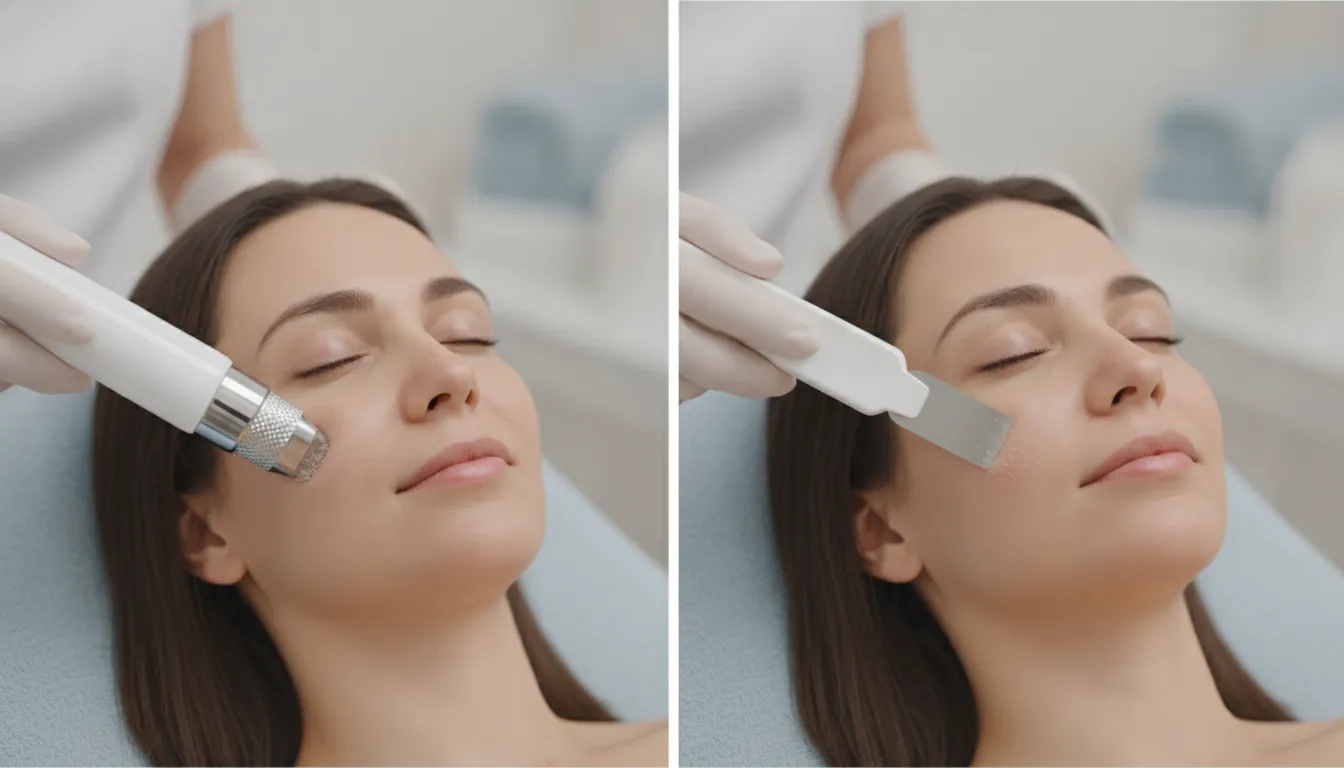
Microdermabrasion uses a device for mechanical exfoliation, while dermaplaning uses a manual blade and may remove fine facial hair. The exact technique and suitability should be discussed with a qualified provider.
How Microdermabrasion Works
Microdermabrasion is a nonsurgical exfoliation procedure that works on the outermost layer of skin. A provider uses a specialized device to loosen and remove surface cells, rather than using the manual blade approach associated with dermaplaning. The goal is not to change your features, but to refine the look and feel of the skin in a controlled way. Cleveland Clinic describes microdermabrasion as gently exfoliating the uppermost skin layer.
What the device does
At a technical level, the treatment removes the stratum corneum, the outermost layer of the epidermis. Depending on the system, abrasive crystals may be propelled against the skin while a handheld vacuum controls the process. Other systems are crystal-free. These differences are worth discussing before treatment because the device and technique can shape the provider's approach. The NCBI Bookshelf explains the crystal and vacuum mechanism and the distinction between crystal and crystal-free systems.
People may explore microdermabrasion when they want to improve the appearance of uneven texture, discoloration, age spots, enlarged pores, blackheads, fine lines, mild acne scars, or sun damage. It may also be considered for broader concerns such as photoaging, melasma, and some scars. These are appearance-focused goals, not promises of a particular result. Skin may look dry or flaky afterward, and sensitivity to sunlight can increase, so sunscreen and the provider's aftercare guidance matter. Cleveland Clinic also notes that many people need multiple treatments, which is another reason to set expectations during a consultation.
A thoughtful consultation should consider your current skin concerns, products, medications, and any active or recurring skin condition. Microdermabrasion may not be right for everyone. Cleveland Clinic recommends speaking with a healthcare provider if you have acne or use acne medication. It also lists frequent rashes or cold sores, eczema, and psoriasis as reasons to discuss suitability. Microdermabrasion is represented in Boho Chic Beauty's current Garwood, NJ skincare offering. Call to confirm the current treatment details, suitability, and appointment availability before making plans.
How Dermaplaning Works and What It Targets
Dermaplaning is a minimally invasive cosmetic procedure that uses a manual instrument to remove the uppermost layers of skin. A trained provider guides a scalpel or razor across the surface rather than using an abrasive device. That difference matters when you are comparing microdermabrasion vs dermaplaning: both are resurfacing approaches, but they use different tools and remove different amounts of skin. Cleveland Clinic explains the basic dermaplaning approach in its patient education guide.
Surface exfoliation and facial-hair removal are related, but not identical
The tool can lift away some surface skin cells while also removing fine facial hair, often called peach fuzz. Someone may choose dermaplaning primarily because they want temporary facial-hair removal, while another person may be interested in the exfoliation component. Those goals should be discussed separately instead of assuming one procedure will address every texture, tone, or hair concern.
It is also important to keep the expectation realistic. Dermaplaning does not permanently remove facial hair. Hair grows back, so any hair-removal effect is temporary. It may reduce the appearance of some acne scars or other skin imperfections by revealing newer skin. This is a possibility, not a guarantee, and it does not replace medical evaluation for a skin concern.
For readers in Garwood, NJ, the most useful next step is a goal-focused conversation with a qualified provider. Ask what the technique is intended to address, whether it fits your current skin needs, and what aftercare guidance applies. Dermaplaning is represented in Boho Chic Beauty's current Garwood, NJ skincare offering. Confirm the current technique, suitability, and appointment details before booking so the service matches your goals.
Which Option Fits Your Skincare Goals?
There is no universally better choice in the microdermabrasion vs dermaplaning conversation. The better starting point is your current goal, your skin's needs, and the approach a qualified provider believes is appropriate. Both are resurfacing procedures, but they use different tools and remove different amounts of skin, according to the Cleveland Clinic's overview of dermaplaning.
How common skincare goals may guide a treatment conversation.
Goal | Likely fit | Why | Question to ask |
Remove temporary facial hair | Dermaplaning may be worth discussing | Dermaplaning can be used for facial-hair removal, but hair grows back, so it is not a permanent solution. | Is this approach appropriate for my skin and hair-removal goal? |
Address the appearance of pores or blackheads | Microdermabrasion may be worth discussing | It may make enlarged pores or blackheads less noticeable. Results and suitability vary. | What can this treatment realistically change for my skin? |
Soften the appearance of uneven tone or sun damage | Microdermabrasion may be worth discussing | It may make discoloration, uneven tone, or sun damage less noticeable, rather than erase it. | What aftercare and sun protection would you recommend? |
Refresh the look of the skin while exfoliating | Either may be considered | The right option depends on the tool, the amount of exfoliation, and your provider's assessment of your goals. | Which method best matches my current skin condition? |
Microdermabrasion can leave skin dry or flaky and more sensitive to sunlight, and many people need multiple treatments. Before choosing, discuss medical history, active concerns, and aftercare with a qualified provider. If you are comparing this topic with other possibilities, our guide to professional skincare service options can help keep the decision focused on your goals. Because both treatments are represented in the current offering, call to confirm the current details, suitability, and scheduling in Garwood, NJ.
What Should You Ask Before Choosing a Treatment?
A thoughtful consultation can make the microdermabrasion vs dermaplaning decision more comfortable and more useful. Instead of choosing based only on a trend or a promised glow, explain your skin concerns, recent changes, and the maintenance you can realistically follow.
Bring questions such as:
- Which concern are we prioritizing?
Ask whether the focus is texture, uneven tone, visible pores, facial hair, or another cosmetic goal, and what the treatment can reasonably address.
What tool or system will be used?
For microdermabrasion, ask whether the system is crystal-based or crystal-free. The National Center for Biotechnology Information describes both approaches, so the provider should be able to explain the method clearly:
review the clinical overview of microdermabrasion
.
- Who will perform the service, and what training applies?
Ask about the provider's qualifications and experience with the specific tool, setting, and skin concerns being discussed.
- What should I do afterward?
Ask about cleansing, products, expected sensitivity, and whether you should adjust activities or products. Sun exposure deserves a direct question because microdermabrasion can increase sensitivity to sunlight, making sunscreen important.
- Are there current skin concerns or medications I should mention?
If you have acne, a rash, cold sores, eczema, psoriasis, or use acne medication, Cleveland Clinic recommends discussing microdermabrasion with a healthcare provider first. This is a prompt for appropriate medical guidance, not a salon diagnosis or automatic exclusion.
- Are both treatments currently available?
The current Boho Chic skincare offering represents microdermabrasion and dermaplaning for Garwood, NJ clients. Call to confirm the current treatment details, suitability, and appointment availability before booking.
Those answers give you a clearer starting point for a transparent, health-first conversation about your skin goals.
What Can You Expect After Either Treatment?
After a resurfacing treatment, your skin may need a little more patience and protection than usual. The most responsible expectation is a plan that follows provider instructions and responds to how your skin feels, not a guaranteed glow or fixed recovery timeline.
Protect the skin while it settles
Microdermabrasion may leave skin feeling dry or flaky, and it can increase sensitivity to sunlight. Cleveland Clinic specifically advises wearing sunscreen after microdermabrasion, so daily sun protection is an important part of aftercare. Follow the provider's guidance about cleansing, moisturizing, makeup, and which products to pause or resume. Do not add strong exfoliants or other active products simply because you want to speed up the result.
Dermaplaning also calls for realistic expectations. If facial hair removal is part of the goal, the effect is temporary because hair grows back. That does not mean the treatment was unsuccessful; it means the result has a natural limit. Your provider can explain what care is appropriate for your skin and whether any visible irritation warrants a follow-up question. Cleveland Clinic's dermaplaning overview offers additional general education.
Before choosing either approach, mention current skin concerns, recent products or treatments, and any relevant medical guidance. Microdermabrasion may not be right for everyone, and Cleveland Clinic recommends discussing suitability with a healthcare provider when certain skin conditions or acne medications are involved. A thoughtful consultation is more useful than assuming one treatment is automatically gentler or better.
How to Plan a Skincare Consultation in Garwood, NJ
If you are comparing options from Garwood, NJ, begin with your skin goals rather than choosing a treatment by name. Do you want to discuss facial hair, surface texture, uneven tone, or a gentler maintenance approach? A thoughtful conversation can help organize those priorities without turning a general comparison into a diagnosis.
Before contacting Boho Chic, review the Boho Chic skincare services and the current skincare treatment menu. The current Boho Chic skincare offering represents both microdermabrasion and dermaplaning for Garwood, NJ clients. Call to confirm the current treatment details, suitability, and appointment availability before booking. You can also read about professional skincare service options to understand how a consultation-led approach may differ from a narrow treatment comparison.
For skincare booking guidance, call (551) 363-8593. Ask whether microdermabrasion or dermaplaning is currently offered, which provider would perform it, and whether your goals are appropriate for the available service. If the provider recommends another facial approach, ask what option may support your priorities. Michele's health-first approach is collaborative and transparent, so the right next step is the one that respects your skin, comfort, and realistic expectations.
Frequently Asked Questions
Is dermaplaning better than microdermabrasion for facial hair?
Dermaplaning may be the more relevant option when temporary removal of fine facial hair is part of your goal. Microdermabrasion focuses on mechanical exfoliation rather than hair removal, so the best fit depends on what you want to address, not on one treatment being universally better. Facial hair grows back after dermaplaning, as explained in the Cleveland Clinic dermaplaning overview.
Which treatment may help with uneven tone or the look of fine lines?
Microdermabrasion may help make the appearance of fine lines, age spots, uneven tone, pores, blackheads, or mild scars less noticeable. Those are possible cosmetic goals, not guaranteed results, and a consultation can help determine whether the approach matches your skin and expectations. Dermaplaning may also be considered for surface exfoliation, but its tool and focus differ.
Can I choose either treatment if my skin is irritated?
Do not assume that an exfoliating treatment is appropriate when your skin is experiencing an active concern. Cleveland Clinic advises discussing microdermabrasion with a healthcare provider if you have acne or take acne medication, frequent rashes or cold sores, eczema, or psoriasis. Its microdermabrasion overview provides general patient education, but it does not replace personalized medical guidance. Share your current products, medications, and skin history with the qualified provider before choosing.
Does Boho Chic Beauty offer microdermabrasion or dermaplaning in Garwood, NJ?
Both microdermabrasion and dermaplaning are represented in Boho Chic Beauty's current Garwood, NJ skincare offering. Garwood-area readers can call (551) 363-8593 to discuss their goals, confirm current treatment details and suitability, and choose an appropriate appointment.


Comments