
Invisible Weft Extensions vs Hand-Tied Extensions
Updated: 37 minutes ago

When comparing invisible weft extensions and hand-tied extensions, start by understanding what each name describes. One term often points to a low-profile look, while the other describes how a weft is constructed. Your natural hair, desired fullness, daily styling, comfort, and maintenance routine matter more than the trend label alone.
What Do Invisible Weft and Hand-Tied Extensions Mean?
Invisible weft extensions are usually described as having a slim, discreet-looking seam or profile. Hand-tied extensions generally describe hair that has been tied by hand onto a fine seam. These labels can overlap across brands, so the name alone does not tell you exactly how the complete system will be installed, supported, or maintained.
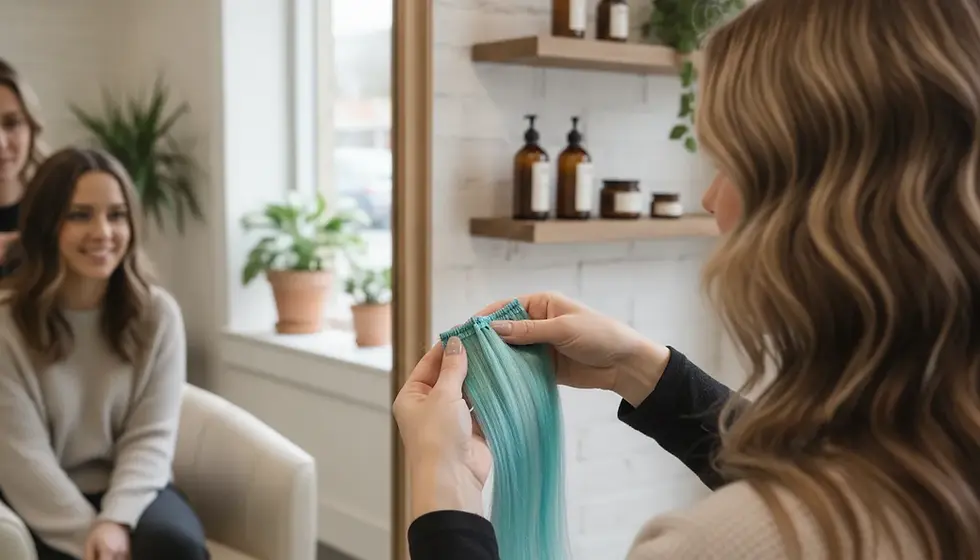
That distinction is important when you are researching hair extensions online. In my consultation process, I want you to see the actual weft and understand what will connect to your own hair. A seam that looks thin in a product photo may still show in a particular part, updo, or texture. A hand-tied weft may be a good fit for one client and not the right plan for another.
Before choosing, ask three basic questions:
What does the method name mean for this exact product?
How will the weft be attached and supported on my hair?
What care and adjustment plan will I need after the appointment?
Invisible Weft Extensions vs Hand Tied: How Do They Compare?
Invisible weft and hand-tied extensions are not automatically better or worse than each other. Invisible weft often highlights a discreet seam, while hand-tied usually describes the construction of the weft. The finished result depends on the full system, including hair density, weight, placement, tension, blending, and your regular hairstyles.
Question | Invisible weft | Hand-tied weft |
What does the name usually describe? | A slim or discreet-looking seam or profile. Definitions vary by maker. | Hair tied by hand onto a weft seam. |
What should you inspect? | Seam thickness, flexibility, and how the edge lies against the head. | Seam flexibility, knotting, and how the weft is intended to be supported. |
What affects visibility? | Placement, natural hair density, texture, color match, and movement. | Placement, natural hair density, texture, color match, and movement. |
What affects comfort? | Added weight, number of rows, placement, tension, and scalp sensitivity. | Added weight, number of rows, placement, tension, and scalp sensitivity. |
What should you plan for? | Care and adjustment timing for the specific product and installation. | Care and adjustment timing for the specific product and installation. |
Best next step | Ask to see the exact system and how it supports your goals. | Ask how the weft will be supported and maintained on your hair. |
The table is a starting point, not a promise about every brand or installation. The useful comparison is not simply invisible weft versus hand-tied. It is the exact construction, the attachment plan, and how those choices fit your hair and routine.
Which Construction Should You Ask About?
The construction question is the heart of an invisible weft extensions vs hand tied consultation. Ask to see the weft before installation and request a plain-language explanation of the seam, attachment, support, and placement. You should understand the whole design, not only one appealing word from a product description.
With an invisible weft, ask what makes the weft look invisible. Does the phrase refer to the seam profile, how the natural hair covers the edge, or a name used by a particular manufacturer? Ask how it may look when you change your part, wear your hair up, or expose the sides.
With a hand-tied weft, ask how the hand-tied construction fits into the full installation. The hand-tied label tells you something about how the weft is made, but it does not answer every question about support, weight, placement, or upkeep. Ask what will be attached to your natural hair and how the design distributes weight.
In my chair, I would rather slow down and explain those details than promise a result based on a label. A good recommendation connects the method to your natural hair, the look you want, and the habits you can realistically maintain.
How Might Each Option Feel on Your Scalp?
Comfort is individual, and no extension label can guarantee the same experience for every client. Comfort may be influenced by the amount of added hair, the number and placement of rows, attachment tension, scalp sensitivity, and how your hair moves between appointments. Two clients can have different experiences with the same method.
During a consultation, ask how the proposed weight will be distributed and what sensations are expected immediately after the service. Extensions should not be treated as something you have to endure. If you notice persistent pain, strong pulling, or irritation, contact the professional who installed them promptly and follow their guidance. Do not tug, cut, or adjust an attachment yourself.
Hair and scalp health should remain part of the decision. A plan that is too heavy, too tight, or not maintained appropriately can place stress on natural hair. The American Academy of Dermatology offers general hair and scalp health information at aad.org. Your stylist can also explain how the proposed extension plan accounts for your hair's current condition.
Invisible Weft Extensions vs Hand Tied: Which Method Fits Your Hair Goals?
Start with your daily goal, not with the method name. Invisible weft and hand-tied extensions can be considered for different hair goals, but the right choice depends on how much length or fullness you want, how you wear your hair, and what your natural hair can comfortably support. An in-person assessment keeps the recommendation grounded.
- If discreet blending is your priority:
Ask how the seam and attachment will blend with your density, color, texture, and usual hairstyles. Invisible does not mean hidden in every style.
- If you change your part often:
Explain that before placement is planned. Ask which areas may be visible when your part moves or your hair is pulled back.
- If you want more fullness:
Discuss the amount of hair and weight needed. More hair is not always the most natural or comfortable answer.
- If your hair is fine, fragile, or shedding:
Share that before discussing installation. A professional assessment may lead to a different plan or a recommendation to wait.
- If you want more length:
Bring realistic reference photos and ask how the added length will blend with your current density and texture.
- If low-effort upkeep matters:
Ask about brushing, drying, sleeping, product use, exercise, and adjustment appointments before you commit.
These prompts are not a remote diagnosis. A stylist should assess your hair in person and be transparent if the look you want does not fit its current condition or density. Boho Chic Beauty's approach is collaborative, so the consultation should help you understand your options rather than pressure you toward one method.
How Can You Evaluate Blending Before You Decide?
A natural blend depends on more than a thin seam. The extension color should work with the surrounding hair, and the amount of added hair should make sense beside your own density. Ask whether the finished result is meant to add length, fullness, or both. A stylist should explain how the lengths will be blended and what styling will support the result.
Look at your hair from more than one angle. The back may look blended while the sides or part reveal an attachment. Mention the styles you actually wear, including ponytails, half-up styles, buns, or hair tucked behind your ears. If you often change your part, bring that into the placement conversation.
Texture also matters. A close color match may not be enough if the extension hair behaves differently from your natural hair. Ask how the textures will look together when styled the way you normally wear them. If you prefer to air-dry, say so. If you regularly use heat tools, ask what care the extension hair requires and how to protect your natural hair.
Reference photos can help communicate your goal, but they are not a guarantee of an identical result. The best plan is one you can maintain without changing your everyday habits more than you are comfortable with.
If you want to review Boho Chic Beauty's current extension services before a consultation, visit the hair services page. The service menu lists Invisible Weft among its extension methods, along with other methods that should be discussed directly for current availability and suitability.
What Maintenance Questions Should You Ask?
Ask for care instructions that match the exact extension hair and attachment you are considering. General advice from a video may not match your product or installation. Clarify how to separate your natural hair from the added hair while brushing, which direction to brush, and whether you need to support the weft with your hand.
Ask how to handle tangles without pulling at the attachment. Request a demonstration before you leave if any step feels unclear. Washing, drying, and detangling may take longer with added hair, especially when a damp or tangled area sits near an attachment.
Talk through your normal routine, including workouts, travel, sleep, and heat styling. Knowing the practical details helps you judge whether an extension method fits your lifestyle, not only whether you like the look in a photo.
How often will the installation need to be checked or adjusted?
How should I brush and detangle near the attachment?
How should I wash and fully dry my hair and extensions?
Are there products or styling habits I should avoid?
How should I protect the hair while sleeping or exercising?
What signs mean I should contact the stylist sooner than planned?
What is involved in removal, and who should perform it?
Build the upkeep into your decision. If your schedule makes regular professional adjustments difficult, say so. Boho Chic Beauty's service information explains that extension INSTALL, MOVE UP, and REMOVAL appointments are booked online, followed by a call or text to complete the booking. Confirm the current service details before choosing a method.
For another perspective on extension planning, you can read the guide to hand-tied extensions for thin hair. It addresses a different hair-goal question, so it should supplement this comparison rather than replace a consultation.
What Should You Ask at an Extension Consultation?
Bring reference photos if they help explain your goal, along with pictures of the styles you wear in everyday life. Then take time to understand the answers before deciding. A consultation is successful when you can explain what you are choosing, why it may fit, and what care it will require.
- Ask what the method name means for this product.
Find out whether the recommendation is an invisible-style weft, a hand-tied weft, or a system that uses overlapping terms. Ask to see the construction.
- Ask how it will be attached and supported.
Clarify what will connect to your natural hair, where it will sit, and how the plan distributes weight.
- Ask whether it fits your density and texture.
Explain any breakage, sensitivity, thinning, shedding, or recent changes in your hair. Ask whether the goal is realistic for its current condition.
- Ask what you will be able to do with your hair.
Discuss parting, ponytails, updos, exercise, and the styles you wear most often. Ask what may expose an attachment.
- Ask what care and appointments are required.
Get a practical explanation of daily care, professional adjustments, and removal.
- Ask what the alternative is if the method is not a good fit.
A thoughtful consultation should include an honest answer, even if that means changing the goal or waiting.
You can also compare this article with Boho Chic Beauty's guide to invisible weft hair extensions and its tape-in versus hand-tied comparison. Those posts cover neighboring questions. This article stays focused on how invisible weft and hand-tied terminology, construction, comfort, and upkeep should be evaluated together.
Boho Chic Beauty serves clients in Garwood, NJ through a personalized, appointment-based studio experience. Use the online booking page to start the extension conversation, and confirm the current service path before scheduling.
Frequently Asked Questions
Are invisible weft extensions the same as hand-tied extensions?
Not necessarily. Hand-tied usually describes how hair is tied onto a weft seam. Invisible weft often describes a low-profile or discreet-looking construction, but terminology varies by product. Ask what the exact product name means and how the complete installation works.
Are invisible wefts always less visible?
No. A method name cannot guarantee that an attachment will stay hidden in every hairstyle. Natural hair density, color, texture, placement, movement, and your usual part all affect blending. Ask a stylist to explain where the attachment may show.
Are hand-tied extensions more comfortable?
There is no universal answer. Comfort depends on the complete installation, including weight, placement, tension, and individual scalp sensitivity. Ask what to expect, and contact your stylist if you experience persistent pain or pulling.
Can extensions damage natural hair?
Extensions can put stress on natural hair when the plan is unsuitable, too heavy, too tight, or not maintained appropriately. A professional assessment, realistic weight and placement, and prompt attention to discomfort support a more informed decision. Discuss existing hair or scalp changes before proceeding.
How do I choose between invisible weft and hand-tied?
Compare the exact construction and installation plan, then consider your hair condition, desired look, comfort, preferred hairstyles, and maintenance routine. Choose only after a qualified stylist has assessed your hair and explained the trade-offs in plain language.
The best extension choice is the one that suits your natural hair, feels manageable, and comes with a clear care plan. It is not simply the method with the most appealing name.
Comments