
How to Choose a Keratin Bond Extension Specialist
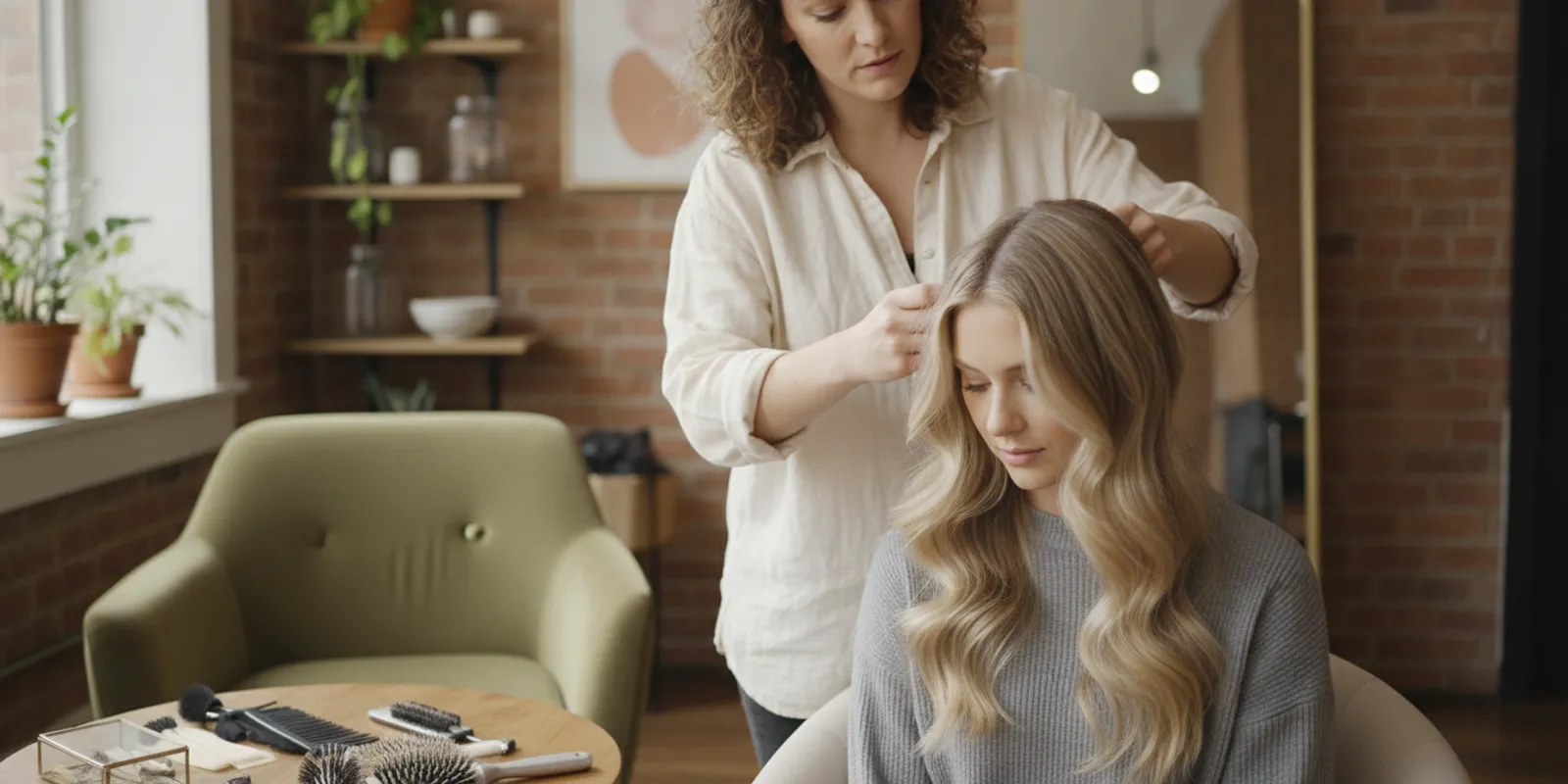
Choosing a keratin bond extension specialist starts with a careful consultation, not a promise of a particular length or look. The right professional will learn about your hair, explain the method and its upkeep, and help you decide whether bonded extensions suit your goals and routine.
What should a keratin bond extension specialist help you decide?
A specialist should help you understand the process before you commit. Keratin bond extensions use small bonds to attach extension strands to sections of your natural hair. The finished look depends on more than the extension hair itself: your starting length and density, desired fullness, placement, color match, daily habits, and willingness to maintain the bonds all matter.
A useful consultation is a two-way conversation. You share what you want and what your hair has experienced; the stylist explains what may be achievable, what may not be suitable, and what care will involve. You should leave with a clearer picture of the trade-offs—not pressure to book a service before your questions are answered.
Because extension methods and application practices vary, do not assume that a stylist offering one type of extension also offers keratin bonds. Ask directly whether this method is currently available, who would perform it, and what consultation or preparation is needed. Boho Chic Beauty offers personalized hair services, including extensions, but contact the salon to confirm current method availability and discuss your particular needs. You can review the salon's hair and beauty services and Michele Dos Santos's approach before reaching out.
How can you prepare for the consultation?
Bring information that helps the stylist assess your hair as it is now, rather than relying on a photo of a finished style alone. Preparation makes the conversation more specific and helps you compare a recommendation with your real routine.
- Collect a few inspiration photos.
Choose examples that show the length, volume, texture, and overall finish you like. Include a photo of your current hair in natural light if you are asking remotely.
- Be ready to describe your hair history.
Mention recent cuts, color or chemical services, previous extensions, and any breakage or changes you have noticed. Share the approximate timing and products or methods when you remember them.
- Think about your everyday routine.
Explain how often you wash and style your hair, whether you exercise or swim regularly, and how much time you want to spend brushing, drying, and styling.
- Set a realistic goal.
Consider whether you want added fullness, length, or both. A modest change may be easier to blend and care for than a dramatic transformation, but your stylist should assess your individual hair.
- Write down practical questions.
Ask about consultation, application, maintenance, removal, home care, and the total time commitment. If the stylist cannot answer a question on the spot, ask how and when you will get a clear answer.
Do not feel that you need to arrive with a technical vocabulary. You can simply explain what you like about a reference image and what you do not want. A collaborative stylist will translate those preferences into questions about fit and upkeep.
What should the specialist ask about your hair history?
Your hair history is central to a responsible recommendation. A specialist should ask about your natural texture, density, length, recent services, prior extension experiences, and what you notice when brushing or styling. They should also look at your hair and scalp rather than relying only on a brief description.
Be candid about past damage, shedding, sensitive areas, or a style that did not work for you. You are not being judged; the information helps the stylist understand what is appropriate to discuss. If you have ongoing scalp discomfort or a sudden, unexplained change in hair, consider speaking with a qualified health professional before proceeding with a cosmetic service.
Listen for a recommendation that accounts for your starting point. If the suggested result seems ambitious, ask what could be adjusted—such as the amount of added hair, the length, or the timing—to support a more manageable plan. A thoughtful specialist should explain uncertainty honestly and avoid guaranteeing that a particular result is possible for everyone.
Ask whether the stylist will check your hair in person before confirming a method. Photos can help start a conversation, but they may not show density, condition, or how your hair behaves in different areas. If an in-person assessment is needed, clarify whether that is a separate appointment and what it covers.
How do you evaluate whether keratin bonds fit your needs?
There is no single extension method that fits every person. Keratin bonds may appeal to someone seeking individual attachments and a particular styling result, but they also come with application and maintenance considerations. Compare the broad differences with a professional instead of selecting a method from a trend or a social post.
Option to discuss | What to ask about | Planning consideration |
Keratin bond extensions | How bonds are placed, how they may blend with your hair, and what removal involves | Ask about application time, home care, maintenance visits, and whether the method fits your hair history |
Weft or sewn-in extensions | How the weft is secured, where it sits, and how it will be maintained | Discuss your desired fullness, styling preferences, and the upkeep schedule recommended for your hair |
Tape-in extensions | How the attachment areas are positioned and how the extensions are removed or repositioned | Ask how your washing and styling habits may affect care and maintenance |
Clip-in or halo pieces | How to choose a piece that blends and how to put it on and take it off correctly | These temporary options may suit someone who prefers not to wear attached extensions continuously |
This table is a starting point for questions, not a universal ranking. Names and application details can vary, and a method that works well for one person may not suit another. Ask the specialist to explain why they are recommending a method for you, what alternatives they considered, and what trade-offs each option brings.
Also ask how the extension hair will be selected and blended. Color, texture, length, and placement contribute to a natural-looking result. Bring reference photos, but let the stylist explain how your own hair affects the match. For more general background, compare your questions with Boho Chic Beauty's guide to choosing an extension type and overview of extension maintenance appointments.
What consultation questions reveal a careful professional?
Instead of asking only, “Can you give me this look?”, ask how the stylist arrived at the recommendation. Their answers can show whether they are considering your hair and lifestyle or simply selling a preferred technique.
- “Is keratin bond application currently a service you provide?”
Confirm the method is offered before planning around it. If it is not, ask whether the salon can discuss another extension option that matches your goals.
- “What about my hair makes you recommend this method?”
A clear answer should connect the recommendation to your goals and hair assessment. Ask what would make the method a poor fit, too.
- “What will the appointment and follow-up involve?”
Ask about the expected appointment sequence, maintenance, and removal plan. Do not rely on a general promise that extensions are easy to care for.
- “What should I change in my home routine?”
Ask for instructions on brushing, washing, drying, heat styling, and product placement. Have the stylist explain which habits matter for the specific attachment method.
- “What could affect the result or comfort?”
A good answer will discuss realistic limitations and how to raise a concern, rather than promising a perfect outcome or saying there are no trade-offs.
- “What is included in the proposed plan?”
Confirm what the consultation covers and whether application, hair, maintenance, and removal are separate steps or appointments. Get any pricing and timing details directly from the salon; they can vary.
- “Who should I contact if I have a question afterward?”
Know how to reach the salon and when to check in. Clear communication before the appointment should continue after it.
Notice how the stylist responds when you ask about risks or alternatives. You should be able to pause, ask for clarification, or decide you need more time. A consultation is useful even if you leave without booking.
How can you compare specialists before choosing?
If you are considering more than one stylist, compare the quality of the conversation and the clarity of the plan—not just the finished photos or a fast estimate. A portfolio can help you understand someone's aesthetic, but it cannot tell you how the work will suit your hair. Ask to see examples that are reasonably close to your current length, texture, and desired fullness. If examples are not available, ask how the stylist evaluates a color and texture match without making promises based on an image.
Use the same questions with each professional. What method do they recommend and why? What would lead them to suggest something else? How will they explain care and removal? What should you expect if your hair or goals change between consultation and appointment? Comparing like with like makes it easier to notice whether an answer is specific to you or simply a standard sales pitch.
Pay attention to communication boundaries as well. Ask how to share reference photos, how appointment details are confirmed, and how to reach the salon if a question comes up. You should understand the next step before you leave or end a call. There is no need to decide immediately; taking time to review your notes is part of making a considered choice.
How should maintenance and home care be explained?
Before choosing keratin bonds, make sure you understand the ongoing care—not just the first appointment. Ask the specialist to show you how to brush around the attachment points and how to handle your hair when washing and drying. Confirm which products and styling habits they recommend for the method you are considering.
As a general extension-care principle, the attachment area deserves attention. The Hair Society's keratin-bond home-care guidance advises protecting bonds by keeping direct high heat, heavy oils, and conditioner away from them while brushing and drying the roots. Ask your own stylist to demonstrate the routine and explain any product-specific instructions; follow the guidance tailored to your hair and installation.
Ask how frequently the stylist recommends check-ins or maintenance, what signs mean you should contact the salon, and who should remove the bonds. Do not try to remove attached extensions yourself unless your professional has explicitly advised a safe method for your installation. The details can depend on how the extensions were applied and your hair's condition.
Think honestly about whether the routine suits you. If you often go to bed with wet hair, prefer very low-maintenance styling, or do not want scheduled upkeep, explain that during the consultation. It may change the recommendation. The goal is not to force your routine to fit an extension method; it is to choose an approach you can realistically care for.
What are warning signs during the decision process?
Take time to reconsider if you feel rushed or cannot get basic information. Warning signs include a specialist who does not ask about your hair history, brushes aside your concerns, cannot explain maintenance or removal, or guarantees a specific result without assessing your hair. Be cautious if you are asked to commit before you understand the process and plan.
It is also reasonable to request a written summary of the recommended method, expected next steps, and the care guidance discussed. Confirm what is included and what is not, rather than assuming every follow-up is part of the original appointment. If a response is unclear, ask again or seek another professional opinion before deciding.
Client photos can help you understand a stylist's aesthetic, but they are not a guarantee of your outcome. If you review examples, ask whether the hair type, starting length, and method are similar to yours. Focus on whether the stylist can explain the work and care involved, not only on a dramatic before-and-after image.
For background on the salon's personalized approach and current contact options, visit the Boho Chic Beauty contact page. The salon's online booking page is another place to review appointment options; confirm method availability before booking.
Frequently asked questions
How do I know if keratin bond extensions are right for my hair?
There is no reliable answer without considering your hair, goals, and care routine. A consultation should include a review of your hair history and an explanation of why the method may or may not fit. Ask about alternatives if you are unsure.
What should I bring to a keratin bond consultation?
Bring inspiration photos, details about recent hair services or previous extensions, and a list of questions about application, maintenance, removal, and home care. Be ready to describe your everyday styling habits and the result you hope to achieve.
How often do keratin bond extensions need maintenance?
The schedule can vary with the installation, your hair, and the stylist's recommendations. Ask for a maintenance plan before you commit, including when the stylist wants to see you and how to handle concerns between visits.
Can I use my regular shampoo and conditioner?
Ask the professional who assesses or installs your extensions. Product placement and care directions matter around attachment points, and the stylist can explain what to use, where to apply it, and how to rinse and dry your hair.
What if I am not sure which extension method I want?
You do not need to choose before your consultation. Explain your priorities—such as length, fullness, styling flexibility, or a temporary option—and ask the specialist to compare methods and their upkeep. You can take time to decide after you understand the trade-offs.
A confident decision comes from a clear assessment, practical maintenance advice, and a specialist who listens to your priorities. Ask your questions, make sure the plan fits your routine, and choose only when you understand the process and next steps.


Comments