
Face Framing Highlights Before and After Dark Hair
Face Framing Highlights Before and After Dark Hair
Dark hair can look brighter around the face without losing the depth that makes your color feel like you. The right result starts with a realistic conversation about your current color, previous services, hair condition, and the amount of contrast you actually want to see.
Face framing highlights before and after dark hair usually create a lighter, more dimensional border around the face instead of changing the entire head. A subtle result softly catches the light, while a brighter choice creates clearer contrast. Lowlights or a root smudge can preserve depth and make the grow-out feel more blended.
Before and after photos are helpful, but they are not a promise of an identical result. Lighting, styling, starting level, and old color all affect how a highlight looks. At Boho Chic Beauty Boutique in Garwood, NJ, the goal is to create a plan that fits your features, routine, and long-term hair health.
What Does the Before and After Look Like on Dark Hair?
On dark hair, the before-and-after effect can range from a quiet change near the hairline to a more visible ribbon of brightness. The finished look depends on the depth of your starting shade, whether the hair is natural or previously colored, the width of the lightened pieces, and how those pieces are toned.
A natural dark brown base may show a gentle shift when the highlights are kept narrow and blended. Previously colored hair may respond differently because old pigment can be uneven or more resistant. Hair that has already been lightened may need an especially careful plan. A stylist should review the history before deciding how much brightness is reasonable in one appointment.
Styling also changes the visual result. A smooth blowout can make the front pieces look more defined. Waves and curls can distribute the light through the movement of the hair. Your usual part matters too. A highlight that looks balanced with a center part may sit differently when you wear a side part or tuck one side behind your ear.
Starting shade and color history matter
Dark hair is not one uniform category. Deep brown, soft black, and hair with layers of permanent color each have their own starting point. The same formula and placement will not create the same result on every person. This is why a reference photo should start a conversation, not end it.
Tell your stylist about prior color, boxed color, keratin services, chemical treatments, and any periods of breakage or unusual dryness. Even if the old service has grown out, the hair may still contain artificial pigment. Honest history helps your stylist choose a controlled approach instead of chasing a photo that your current hair cannot safely reproduce.
Face Frame versus Mini placement
A Face Frame focuses on the hairline and the pieces that sit closest to the face. A Mini expands beyond that area into the mohawk section at the top of the head. The Face Frame creates a concentrated accent. The Mini can connect the front brightness with more of the top section while remaining more focused than an all-over highlight.
Neither choice is automatically better. Your haircut, part, density, styling habits, and comfort with contrast all matter. If you are comparing highlight services in Garwood, bring photos that show the placement you like. Also describe what you do not want, such as a sharp stripe, excessive warmth, or a grow-out line that feels too obvious.

How Bright Can Face Framing Highlights Be?
There is no single correct brightness for dark hair. A well-planned face frame can be subtle, balanced, or more visible while still looking intentional. The difference comes from the amount of hair selected, the width of each section, the amount of lightening, the tone placed afterward, and the contrast kept through the rest of the hair.
Think of the following as a consultation guide rather than official menu names. A stylist can adjust the plan after seeing your hair in person and understanding how you wear it every day.
Brightness approach | Visual effect | Best consultation focus |
Subtle | A softly lighter tone creates a gentle accent without a sharp break from the dark base. | Discuss quiet contrast, preferred warmth or coolness, and visibility in ordinary lighting. |
Balanced | A clearer change brings light to the face while preserving depth through the rest of the hair. | Discuss how the result should read indoors, outdoors, in photos, and with your normal styling. |
More visible | A higher-contrast tone makes the front pieces a stronger focal point against the dark base. | Discuss previous color, maintenance, and how much lightening the hair can reasonably support. |
Tone matters as much as lift. Warm, neutral, or cooler-looking pieces can create very different impressions against dark hair. A brighter piece is not automatically more flattering, and a softer result is not automatically less noticeable. The best choice is the one that works with your complexion, wardrobe, haircut, and willingness to maintain it.
Placement matters when your hair moves. A face frame that is too narrow may disappear when the hair is curled. A section that is too wide may feel stronger than expected when the hair is pulled back. Discuss both your everyday style and the occasions when you wear your hair differently before choosing the final section size.
Should Dark Hair Include Lowlights or a Root Smudge?
Lowlights and a root smudge can help a bright face frame feel connected to the rest of dark hair. They are not required for every result, but they can be useful when the lightened pieces feel too uniform, the base needs more dimension, or you want a softer transition as the color grows.
When lowlights can add useful depth
Lowlights are darker or deeper pieces placed among lighter sections. Around the face, they can keep the color from looking like one solid band of brightness. They may also help the front pieces relate to the darker lengths, especially when the surrounding hair has natural variation.
The purpose is not to make the hair look striped. Lowlights should be considered in relation to your base and the brightness you are adding. On some dark hair, the most natural plan may use very little extra depth because the surrounding color already provides contrast. On other hair, a few deeper pieces can make the lighter pieces look more dimensional.
When a root smudge can soften grow-out
A root smudge blends a deeper tone near the root into the lighter lengths. It can reduce the appearance of a hard starting line and make the transition feel more gradual. The result still grows, so a root smudge does not remove maintenance. It can simply make the change look softer as time passes.
Ask how a root smudge will affect your next appointment. Some clients prefer a consistent, defined frame. Others want a lived-in result that does not require frequent reshaping. Your preference should guide the choice rather than the trend name alone.
What Happens During a Face Framing Highlight Appointment?
A thoughtful appointment is a series of decisions, not just an application step. The conversation before lightener is important because it sets the boundaries for brightness, placement, timing, and hair health.
- Review your hair history.
Share natural color, previous color, lightening, chemical services, and any concerns about dryness or breakage.
- Discuss your reference photos.
Point out what you like about each image, including brightness, placement, tone, and how blended the grow-out appears.
- Choose the service area.
Decide whether a Face Frame near the hairline or a Mini that extends into the mohawk area better fits your desired result.
- Set a realistic brightness goal.
Your stylist will consider the starting level and condition of the hair before recommending how much change is appropriate.
- Plan the supporting details.
Talk through toner or gloss, lowlights, a root smudge, conditioning, and the finish that will show the result clearly.
- Review home care and timing.
Leave with a practical understanding of how to care for the color and when to discuss a refresh.
At Boho Chic Beauty Boutique, Michele Dos Santos approaches the service as a collaborative consultation. That means you can say that you want more softness, less contrast, a cooler look, or a result that blends with your natural depth. Clear feedback is part of getting a result that feels comfortable, not a sign that you are being difficult.
Hair services are provided at 10 South Ave, Studio 22, Garwood, NJ 07027. You can review the Boho Chic Beauty locations page before your appointment and learn more about the person behind the service on the Boho Chic Beauty team page.
How Do You Maintain Face Framing Highlights on Dark Hair?
Maintenance depends on placement, contrast, tone, growth rate, and how closely you want to preserve the original finish. A small face frame may be easier to live with than a larger, brighter service, but it still benefits from a plan.
Keep the first few weeks gentle
Follow the home-care guidance given for your hair rather than adding several new products at once. Use a routine that supports moisture and manageability, and be thoughtful with heat styling. If your hair feels unusually dry or fragile, tell your stylist before scheduling more lightening.
Color can also look different as it settles into your routine. Indoor light, sunlight, freshly washed hair, and styled hair each show tone differently. Take a few photos in the lighting where you normally see yourself before deciding that the result needs to be changed.
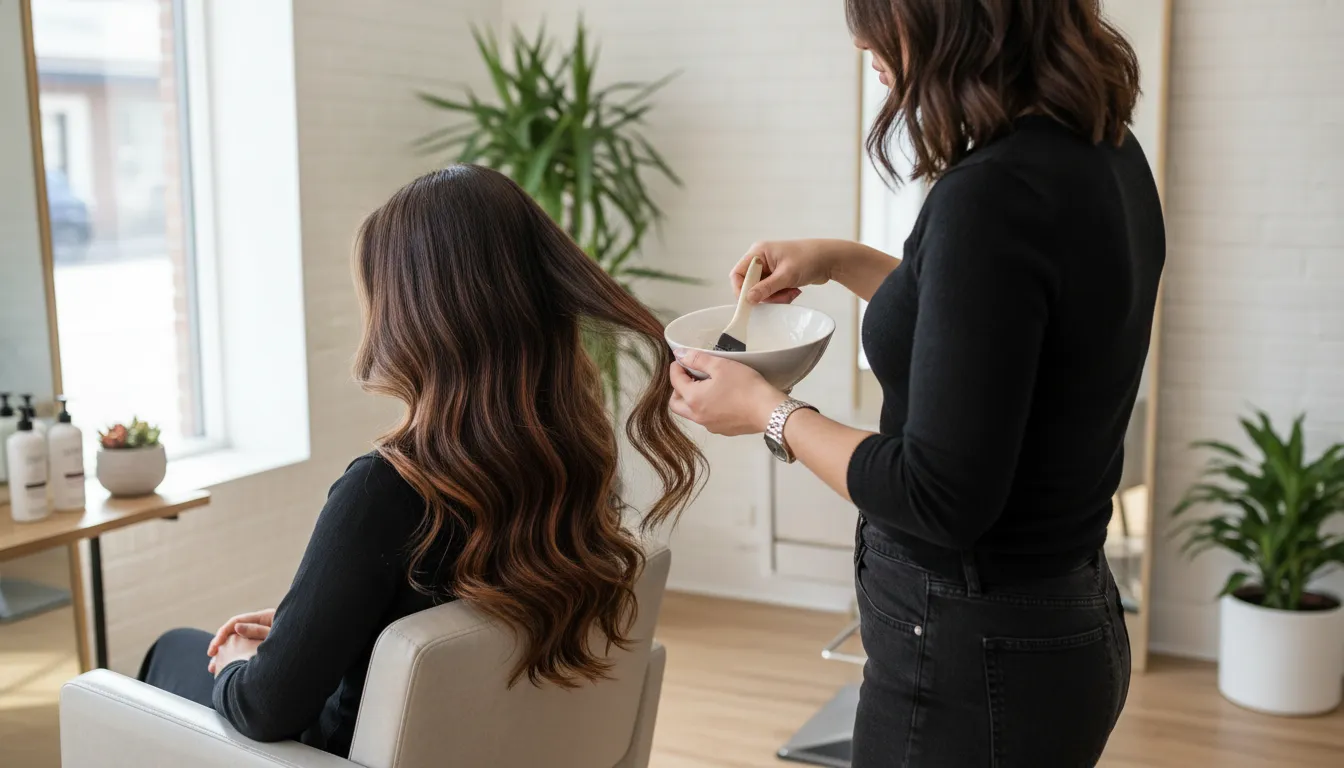
Plan the refresh around your actual routine
Some people prefer to refresh visible brightness on a regular schedule. Others wait until the contrast or tone no longer feels right. There is no universal calendar because hair grows at different rates and face frames are placed differently. Ask what will be most useful to refresh first, such as the front pieces, the toner, or the root transition.
Avoid treating a maintenance visit as an automatic reason to make the color brighter. Sometimes the best next step is to restore tone, add gloss, adjust depth, or improve conditioning. The healthiest plan may be a smaller service than the original inspiration photo suggests.
Read more about thoughtful hair maintenance and bring your questions to your next appointment.
What to Expect from Face Framing Highlights Before and After Dark Hair
Face framing highlights before and after dark hair should be planned around your desired feeling. Do you want a quiet glow around the hairline? You may prefer a clear change that brightens your features. Or you may want a stronger frame that remains visible when your hair is styled away from your face.
Then consider the information your stylist needs. Bring a few useful reference photos, explain your usual part and styling routine, and share your complete color history. Mention concerns about dryness, breakage, or unwanted warmth. These details help turn a broad idea into a service plan that respects your hair rather than forcing it toward a generic before-and-after image.
Boho Chic Beauty Boutique serves clients in Garwood, NJ with a personalized approach to hair color, cuts, extensions, skincare, and waxing. The salon's focus is collaborative and health-first. If you are unsure whether a Face Frame or Mini is the better fit, an online booking conversation is a practical place to begin.
Frequently Asked Questions
What is the difference between face framing highlights and full highlights?
Face framing highlights focus on the hairline around the face, while full highlights cover a broader area of the head. A Face Frame creates a concentrated accent. A Mini extends into the mohawk area. Your stylist can compare placement with your haircut, part, desired contrast, and usual styling.
Are face framing highlights safe for dark hair?
They can be a suitable option when the lightening plan matches your starting color, previous color, and hair condition. Dark hair may need controlled lightening before the desired tone is applied. A professional assessment helps protect hair integrity and sets more realistic expectations than a photo alone. Your stylist can also recommend a smaller brightness goal when the hair history calls for extra care.
How often do face framing highlights need maintenance?
Timing depends on growth rate, placement, tone, contrast, and how softly you want regrowth to blend. Some clients discuss a refresh after several weeks, while others wait longer. A root smudge may create a gentler transition, but it does not eliminate the need to reassess the color. Ask your stylist whether your next visit should focus on the front pieces, the tone, the root transition, or conditioning.
Can I add lowlights to face framing highlights?
Yes. Lowlights can add depth and contrast when bright pieces feel too uniform, especially against a dark base. They are not necessary for every result. Your stylist can decide whether added depth will make the front look more dimensional or whether your natural base already provides enough contrast.
What should I bring to my highlight consultation?
Bring a few inspiration photos and be ready to describe how bright, warm, cool, blended, or subtle you want the pieces to look. Share your color history, home routine, and concerns about dryness or breakage. The consultation is a collaborative step for choosing placement, tone, and a realistic before-and-after plan.
Book Your Face Framing Hair Appointment
Seeing how face framing highlights may look on dark hair is easier when your starting color, hair history, and brightness goals are considered together. A personalized conversation can help you choose a balanced approach, including whether added depth or a softer grow-out suits your routine. For guidance from Boho Chic Beauty Boutique in Garwood, NJ, book online.


Comments