
Curly Hair Routine: A Health-First Guide
Healthy curls usually respond better to a consistent, flexible process than to a crowded shelf of products. For readers in Garwood, NJ and nearby New Jersey communities, the goal is not to force every curl into the same pattern. Notice what your hair, scalp, schedule, and climate are telling you. Then make small adjustments over time.
A curly hair routine is a repeatable sequence: cleanse the scalp, condition and detangle gently, style with enough moisture, dry with less friction, and review how your hair responds. Hair type and texture influence how often you cleanse, so a schedule that works for one person may leave another person's curls dry or weighed down. Cleveland Clinic explains that washing frequency varies by hair type and texture.
That health-first approach gives you a useful starting point without turning curl care into a rigid rulebook. Begin by looking at the essential steps, what each one is meant to do, and which signals suggest your routine needs a thoughtful change.
What Should a Curly Hair Routine Include?
A useful curly hair routine follows a flexible order: cleanse, condition, style, dry, refresh, and review. The sequence matters because each step prepares your hair for the next one. Exact products, timing, and frequency should respond to your scalp, curl pattern, density, porosity, climate, and lifestyle. A routine should support healthy hair, not create another set of rules you feel pressured to follow.
- Cleanse:
Focus on the scalp and rinse through the lengths.
- Condition:
Add slip for gentle detangling and comfort.
- Style:
Shape curls while the hair has enough moisture.
- Dry:
Reduce friction and protect hair before diffusing.
- Review:
Adjust one variable based on the result.
Start with a calm, consistent wash-day sequence
Begin by cleansing the scalp and allowing the rinse to move through the lengths. How often you cleanse depends on your hair and scalp. Daily washing may not suit many curly textures, and Cleveland Clinic notes that over-washing can contribute to dryness and breakage. But an oily scalp or fine hair may need more frequent cleansing. Use your hair's response as feedback rather than copying someone else's schedule.
Next, condition and detangle gently. Work through the hair with care, using your fingers or a suitable detangling tool, and avoid forcing knots. After rinsing, apply styling products while the hair is damp or wet, depending on what helps your curls form and hold. You do not need a long product list. A simple routine that you can repeat consistently is often more useful than a complicated one that leaves your hair overloaded or your schedule frustrated.
Hair signal | Thoughtful adjustment |
Scalp feels oily or uncomfortable | Review cleansing timing and buildup. |
Curls feel dry or rough | Review water, conditioning, and friction. |
Curls feel flat or coated | Use less product and rinse more thoroughly. |
Dry, refresh, and review the result
After styling, blot or wrap the hair with a microfiber towel or cotton T-shirt instead of rough-drying with a standard towel. If you diffuse, consider heat protection and use an approach that feels comfortable for your hair and scalp. Let the curl pattern settle before judging the result. Frizz, flat roots, dryness, or weak definition can each point to a different adjustment, including changing the amount of water, product, tension, or drying time.
On non-wash days, refresh selectively. Lightly adding water may help reactivate curls, while some hair responds better to leaving the shape alone. Notice how your hair feels, not only how it looks. If your scalp remains uncomfortable, or you see unusual shedding or significant damage, seek professional evaluation rather than trying to diagnose the issue yourself.
For readers in Garwood and surrounding New Jersey communities, a consultation can make this process easier to personalize. Boho Chic Beauty's curly hair services and curly cuts are designed to support education and practical home care, with recommendations shaped around your goals and maintenance needs.
How Often Should You Cleanse Curly Hair?
Start with your scalp, not a calendar. The right cleansing rhythm depends on your hair's texture, density, styling habits, climate, and how your scalp feels between wash days. The Cleveland Clinic explains that washing frequency varies by hair type and texture, so a routine that works for someone with fine, wavy hair may not suit someone with dense, tightly curled hair.
During wash day, use your fingertips to work cleanser across the scalp, where sweat, oil, and styling residue collect. Let the lather or rinse move through the lengths rather than aggressively scrubbing the curls themselves. Curly hair often benefits from less friction, especially when the lengths feel dry or fragile. Daily washing may not be comfortable for every curly-haired person, and the Cleveland Clinic notes that over-washing can contribute to dryness, breakage, and damage over time. That does not make frequent cleansing universally wrong. If your scalp becomes oily or uncomfortable quickly, a more frequent schedule may be reasonable.
Buildup is another reason your routine may need to change. Heavy styling products, repeated refreshes, sweat, and mineral-heavy water can leave hair feeling coated or less responsive. That sensation is a cue to review your cleansing approach, not a reason to impose a universal product ban or automatically use a harsh treatment. A stylist can help you distinguish product residue from dryness or a change in your hair's condition.
Signs You May Need to Cleanse More Often
Pay attention to a scalp that feels persistently greasy, sweaty, or uncomfortable before your usual wash day. Curls may also look weighed down, lose definition, or stop responding to products that normally work well. These observations can guide a small adjustment, such as shortening the interval between washes or checking whether your styling layers are more than your hair currently needs.
Signs You May Need to Space Washes Further Apart
If your hair feels rough, unusually dry, or more prone to tangling after frequent washing, try giving it more time between cleanses while monitoring your scalp. The goal is not to stretch wash days at any cost. It is to find a balance that keeps the scalp comfortable and the lengths manageable. For readers building a curly hair routine in Garwood, NJ or elsewhere in New Jersey, track how your hair responds for a few weeks. That can be more useful than copying someone else's fixed schedule.
Conditioning and Detangling Without Overloading Your Curls
Conditioner should make wash day easier, not leave your curls limp, coated, or difficult to style. The right amount depends on how your hair responds, so treat conditioning as an adjustment rather than a fixed rule. Hair that feels rough, tangles quickly, or loses softness may need more support. Hair that looks flat, greasy, or refuses to hold its shape may need less weight or more thorough rinsing.
Work with sections and plenty of slip
Apply conditioner in manageable sections, especially when your hair is dense or tightly curled. Sectioning helps you distribute it more evenly and keeps you from repeatedly pulling through the same areas. Begin at the ends, where tangles and dryness often collect, then work upward with your fingers or a gentle detangling tool. Move slowly from the ends toward the roots instead of forcing a tool through a knot.
One beginner-friendly technique is to detangle gently, then scrunch a little water into the conditioner to help it spread and absorb. That approach is described by this curly hair routine guide. Keep the hair supported in your hand as you work. If a section resists, add water, pause, and separate it into smaller pieces rather than increasing tension.
Match the conditioning level to your hair
Fine curls and waves may need a lighter application focused on the lengths and ends. Use less near the roots if that area loses volume quickly. Dense hair may need more deliberate coverage, while dry or porous-feeling hair may respond well to occasional deeper conditioning. A cited guide notes that some hair may benefit from deep conditioning every one to two weeks. That is not a universal schedule. Curlsmith's conditioning guidance also needs to be interpreted through your hair's response.
Think of deep conditioning as a response to a need, not a requirement to follow forever. If your curls feel softer and behave better afterward, that may be useful feedback. If they feel heavy, dull, or less defined, reduce the amount, limit where you apply it, or allow more time between treatments. Rinse until the hair feels soft rather than coated or slippery. Leftover conditioner can interfere with hold, according to the cited routine guide at Gena Marie.
A healthy curly hair routine leaves room for observation. Notice how your hair feels while wet, how it dries, and whether the next refresh is easier or harder. Those details are more useful than copying someone else's product count or conditioning calendar.
How to Style and Dry Curls With Less Friction
Styling usually works best when curls still have enough water to move and group together. After conditioning and rinsing, apply your chosen styling product to wet or damp hair rather than waiting until it is nearly dry. The right moisture level is personal: very wet hair may help some curls clump, while finer or easily weighed-down hair may respond better after a gentle squeeze with a soft T-shirt. The goal is even distribution without pulling the pattern apart.
Apply product while the hair still has slip
Work in sections if your hair is dense, and use your hands to smooth product over the outside of each section before gently scrunching upward. Scrunching encourages the curl to form without combing it into a shape that may not hold. If the hair feels sticky, coated, or difficult to separate, use less product next time and observe whether a little more water improves distribution. There is no universal product count that every curly hair routine needs.
When the hair starts to dry before styling is finished, mist it lightly to restore the dampness that helps the product spread. A simple spray bottle can help you adjust that level gradually, rather than soaking the entire head again. This approach is described in a beginner-friendly routine from Gena Marie, but your hair's density, porosity, and response should guide the final technique.
Choose a low-friction way to remove excess water
When you are ready to dry, avoid rough towel rubbing. A microfiber towel or clean cotton T-shirt can help remove excess water with less dragging across the cuticle than vigorous rubbing. Cup the curls and press or scrunch gently instead of twisting them tightly. This is especially useful when your priority is preserving the shape you created while styling.
Diffuse with protection and patience
If you use a diffuser, apply heat protectant first. One cited technique distributes it through the palms, focusing on the ends and working upward, but follow the directions for the product you own. Use a moderate heat setting, keep the dryer moving, and allow the curls to set rather than repeatedly disturbing them. Heat protectant is a helpful preparation step, not permission to use unlimited heat. If your hair feels rough, unusually dry, or more fragile after diffusing, reduce the heat, increase the distance, or return to air-drying while you reassess.
Track how your curls look and feel after each wash day. That feedback is more useful than forcing your routine to match a curl-type label.
How to Adjust a Curly Hair Routine for Your Hair
Pattern labels can give you a starting point, but they are not instructions. Hair-type systems commonly use numbers and lettered subcategories. Type 2 is generally used for wavy hair, while types 3 and 4 describe curlier and coily patterns. These labels are useful shorthand, yet they do not account for density, porosity, scalp needs, climate, or the way you wear your hair. Treat your routine as an observation process: notice what happens after cleansing, conditioning, styling, and drying, then make one thoughtful adjustment at a time.
Fine or easily weighed-down hair
Fine hair may look flat or lose definition when too much product, water, or conditioning is left in the wrong places. That does not mean it needs to be dry or under-conditioned. Start with modest amounts and apply richer products mainly where the hair feels less flexible or more exposed. If your roots collapse quickly, keep styling products focused through the mid-lengths and ends, and reassess whether your conditioner is being rinsed thoroughly. A routine that feels light on wash day but leaves the hair rough the next morning may need more moisture, not simply more hold. Change one variable so you can tell what actually helped.
Dense or thirsty hair
Dense hair can need more time and attention for water and conditioner to reach every layer. Work in sections when cleansing, detangling, or applying styling products, and use your hands to check whether the interior layers are receiving enough moisture. If curls feel stiff, tangled, or unusually rough after drying, review the amount of water and conditioner used before adding more products. A deep-conditioning treatment may be useful for some hair every one to two weeks. But the right cadence depends on how your hair responds, not on a fixed calendar. Curly hair services and curly cuts can also help you understand how density affects shape and maintenance.
Wavy versus tighter curls
Waves often need enough support to hold their shape without losing movement, while tighter curls may need more deliberate sectioning, moisture, and drying time. Neither pattern is better, and a person can have more than one pattern across the same head. Consider your lifestyle, humidity, exercise, and preferred finish. A routine for a busy week may be simpler than a routine for a special event. Keep brief notes about definition, frizz, softness, scalp comfort, and how long the result lasts. If persistent scalp discomfort, unusual shedding, or significant damage concerns you, seek appropriate professional evaluation rather than trying to diagnose the issue through products.
When a Stylist Can Help You Personalize Your Routine
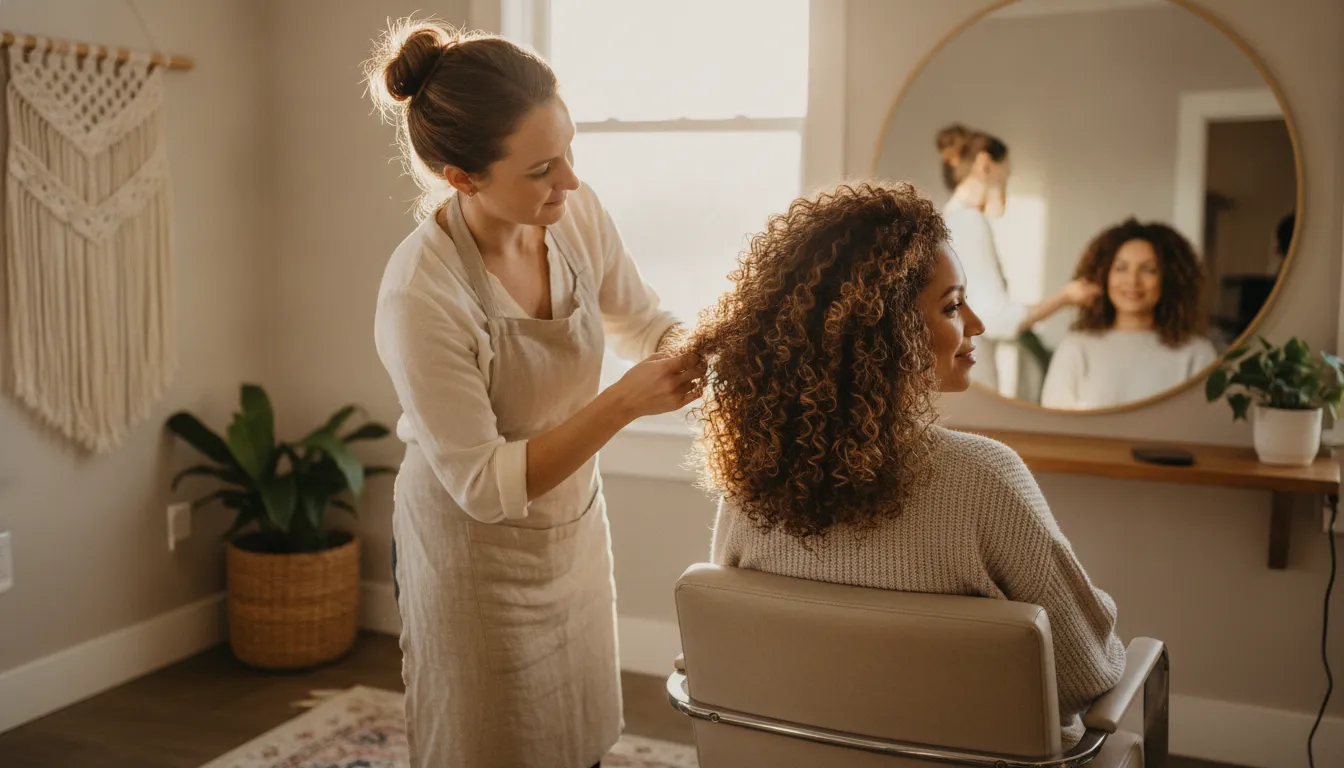
A curly hair routine becomes easier to maintain when it reflects your actual hair, schedule, and goals rather than a template from someone else. A stylist can help you understand what your curls are communicating, then adjust the routine so it supports long-term hair health.
In a collaborative consultation, Michele Dos Santos considers several factors together: hair analysis, your desired outcome, lifestyle, maintenance expectations, and budget. That conversation matters because two people with a similar curl pattern may still need very different approaches. Density, porosity, scalp needs, climate, styling habits, and the way your hair responds between wash days can all change what works.
Look beyond curl-pattern labels
Type systems can be useful shorthand, but they are not a complete diagnosis of your hair. A label does not tell you how much time you have to style, whether your hair feels dry or weighed down, or how it behaves in New Jersey humidity. A stylist can look at the full picture and help you decide which parts of your routine to keep, simplify, or change.
Professional support can be especially helpful when you are unsure whether your concern comes from cleansing, conditioning, styling technique, or the shape of the cut itself. Boho Chic Beauty's service menu includes the Curly Queen line and curly cuts for clients seeking specialized curly-hair care. You can review the available curly hair services and curly cuts before deciding what kind of appointment fits your needs.
Leave with skills you can use at home
The goal is not to create a complicated routine that only works in the salon. Michele's approach includes home-care education and technique explanation, so you can better understand how to cleanse, condition, style, dry, and refresh your curls between visits. Ask questions, notice how your hair responds, and make one adjustment at a time. That process creates a routine you can realistically repeat, whether you live in Garwood or elsewhere in New Jersey.
Consider a consultation when repeated trial and error is leaving your hair dry, flat, undefined, or difficult to manage. Professional guidance can also help when you want a cut and routine that work together. Thoughtful guidance can replace guesswork with a plan built around your hair and your life.
Frequently Asked Questions
What is the proper order for a curly hair routine?
Start by cleansing the scalp and hair as needed, then condition and detangle gently. Apply your chosen styling approach while the hair is damp or wet, shape the curls with minimal friction, and dry carefully. Once you see how your hair responds, adjust the amount of moisture, styling support, or drying time rather than changing everything at once.
What is a good 3-step routine for curly hair?
A simple starting point is cleanse, condition, and style. Cleanse when your scalp and hair need it, condition to support detangling, then style while the hair is damp or wet. This is a framework, not a rule. Your ideal frequency and technique depend on factors such as density, porosity, texture, climate, and how your curls look and feel afterward.
What should I do to my curly hair every day?
You may not need to wash or fully restyle your curls every day. Instead, check whether they need gentle reshaping, light moisture, or no adjustment at all. Reduce friction while sleeping and handling your hair, and avoid pulling through tangles when it is dry. If daily refreshes leave your hair heavy, dry, or less defined, simplify and reassess.
Do I have 2C or 3A curls?
Pattern labels can be useful shorthand, but they do not determine your entire routine. A 2C pattern is often described as strongly wavy, while 3A is commonly described as looser curls. Look beyond the label at density, porosity, scalp needs, and how your hair responds to moisture and styling. Consistent results and hair health matter more than fitting one category perfectly.
Book a Personalized Curly Hair Appointment
A routine works best when it reflects your curls, lifestyle, and maintenance needs rather than a one-size-fits-all checklist. A personalized appointment can help you understand what your hair is responding to and choose practical next steps for healthier, more manageable styling.


Comments