
At-Home Hair Gloss vs Salon Treatment: Which Is Better?
Choosing between at-home hair gloss vs salon treatment depends on your desired tone, your familiarity with your hair, and whether you need a professional assessment. At-home gloss can be a convenient way to refresh hair when you already understand the product and your goal is modest. A salon treatment gives you a chance to talk through your starting color, previous services, and desired finish before anything is applied.
What is the difference between at-home hair gloss and a salon treatment?
Both options are intended to refine the look and feel of hair, but they are not interchangeable. "Hair gloss" can describe different kinds of products and salon services. Some at-home products are clear; others add a tint or are designed to shift the appearance of tone. In a salon, the stylist can first discuss whether a gloss, a tone adjustment, or another service better fits your hair and expectations.
That distinction matters because a product's label, formula, and directions determine what it is intended to do. Do not assume every gloss works the same way, lasts the same amount of time, or can correct any color concern. Hair cosmetics include products with different formulations and purposes, as described in this review of hair cosmetic formulations.
At Boho Chic Beauty, Gloss + Tone and Gloss + Glow are available salon-service options. A conversation can help clarify which service is appropriate for your current hair and what kind of result is realistic. The goal is not to promise a dramatic change from a gloss. It is to choose a considered approach that respects your hair and your desired finish.
How do the two options compare?
Consideration | At-home gloss | Salon treatment |
Choosing a formula | You select from the product label and your own understanding of your hair. | You can discuss your hair history and goal with a stylist before choosing a service. |
Tone control | Results depend on the product, your starting color, and how you follow its directions. | A stylist can assess your current tone and explain what a gloss service can reasonably address. |
Application | You apply it yourself and are responsible for even coverage and timing. | The service is applied in the salon with an opportunity to ask questions as you go. |
Time and convenience | Can fit your schedule, but requires reading and following the instructions carefully. | Requires an appointment and time set aside for a consultation and service. |
When there is uncertainty | Less suitable when you are unsure what the product does or how it may interact with past color. | A consultation can help you decide whether to proceed, adjust the goal, or wait. |
Best fit | A familiar, straightforward maintenance choice when the label and your goal clearly align. | A more supported choice when you want personalized guidance or have a complex color history. |
This is a decision guide, not a guarantee of a particular result. The same product can appear different on different starting shades, and an existing color history may affect what is sensible to try next.
Think through the decision in three parts: your goal, your history, and the amount of uncertainty you are comfortable managing. If the goal is simply to use a familiar product as directed, home application may feel manageable. If the goal depends on a specific tonal adjustment, first ask whether the product is designed to create that effect on your starting shade. If you cannot answer that from the label, seek advice before applying it.
For example, someone with a consistent color routine who wants to maintain a known finish has a different decision to make from someone with several layers of color who wants to correct unevenness. The first person may be able to evaluate a clearly labeled product. The second needs a more careful assessment because several factors can affect how another formula appears. Neither situation calls for a one-size-fits-all promise.
When might at-home hair gloss make sense?
An at-home gloss may be reasonable when you have a clear, limited goal and understand exactly what the product is designed to do. For example, you may want to try a clear product for a cosmetic finish, or maintain a familiar tone with a product whose directions match your needs. The important part is being honest about your experience and not expecting a simple gloss to correct a larger color issue.
- You know your starting point.
You can describe your current color, whether it has been colored before, and what you want to maintain.
- The product's purpose is clear.
Its label describes the kind of finish or tone effect you are seeking; it is not a guess based on a product name or a social media result.
- You can follow the directions exactly.
You are comfortable completing any label-directed checks, applying it as instructed, and respecting the specified timing.
- You are comfortable with some uncertainty.
You understand that the outcome may not match a photograph or look exactly like it did on someone with a different base color.
Read the complete directions before opening the product. Check the ingredient and warning information, use it only as directed, and do not apply it to skin or hair in a way the label prohibits. If the directions call for a sensitivity test, follow them and the specified timing. Do not improvise by leaving a product on longer, mixing it with another formula, or repeating an application because the first result seems subtle.
A practical way to reduce avoidable mistakes is to prepare before you start. Set aside enough time to read the directions without rushing. Check that you have the tools the instructions call for.
Make sure you can see the hair clearly while applying the product. Keep the package available so you can refer back to timing and warnings.
If the process requires a step you cannot do comfortably or safely, pause rather than improvising. That is useful information about whether an at-home application is the right choice.
After application, judge the result in ordinary light rather than comparing it immediately with a heavily edited image. Make a note of the product name and when you used it, especially if you may speak with a stylist later.
That simple record can help explain your hair history accurately. Avoid layering on a second product just because the finish is more subtle than expected. Base any follow-up on the product directions and, when needed, professional advice.
It is also worth pausing if your hair feels unusually fragile, your scalp is irritated, or you recently had a color service and are not sure what can safely follow. A gloss is not a shortcut for resolving every uneven or unwanted tone. If you cannot confidently identify the product type and its intended result, get advice before applying it.
When is a salon gloss the better choice?
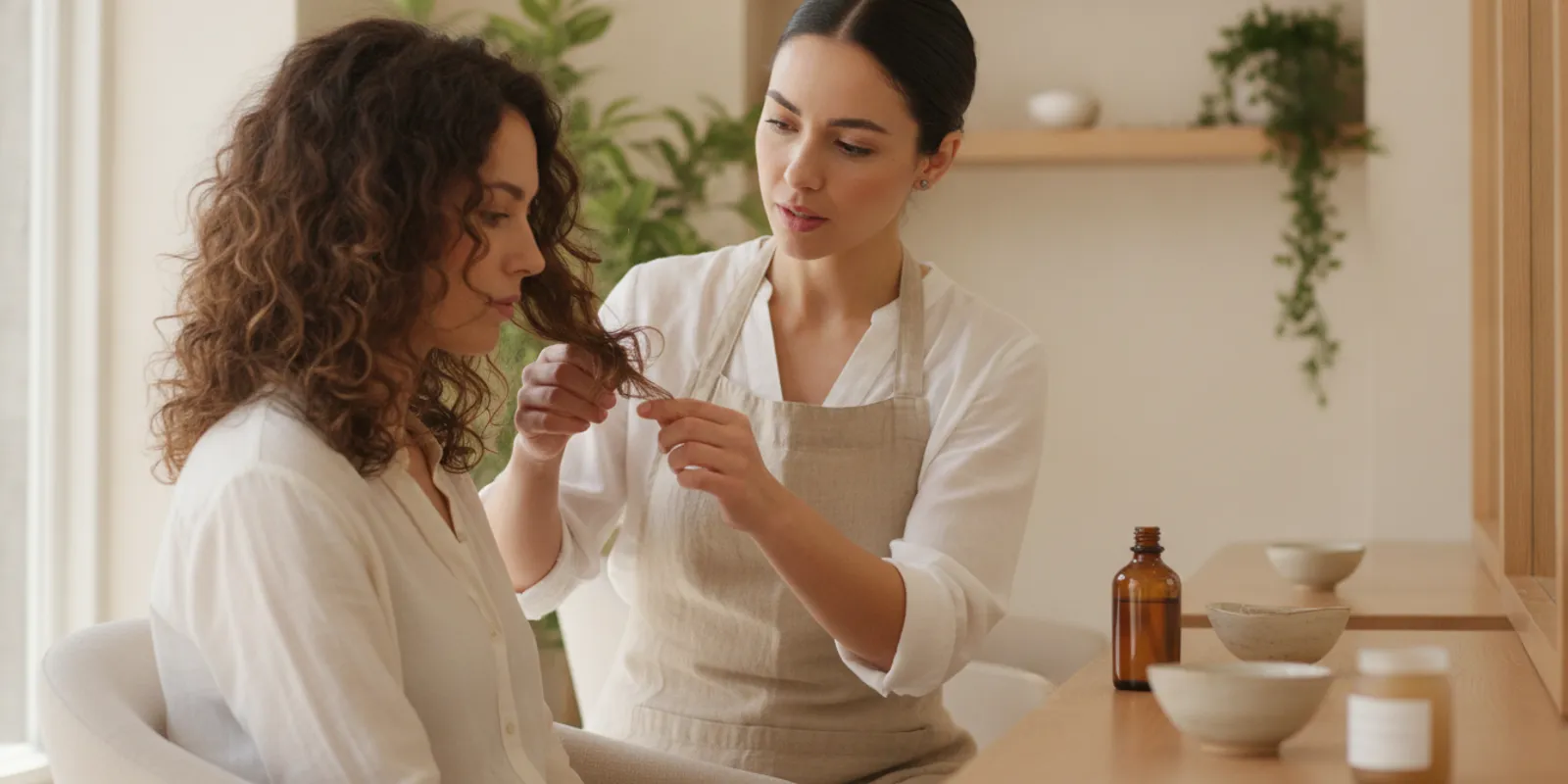
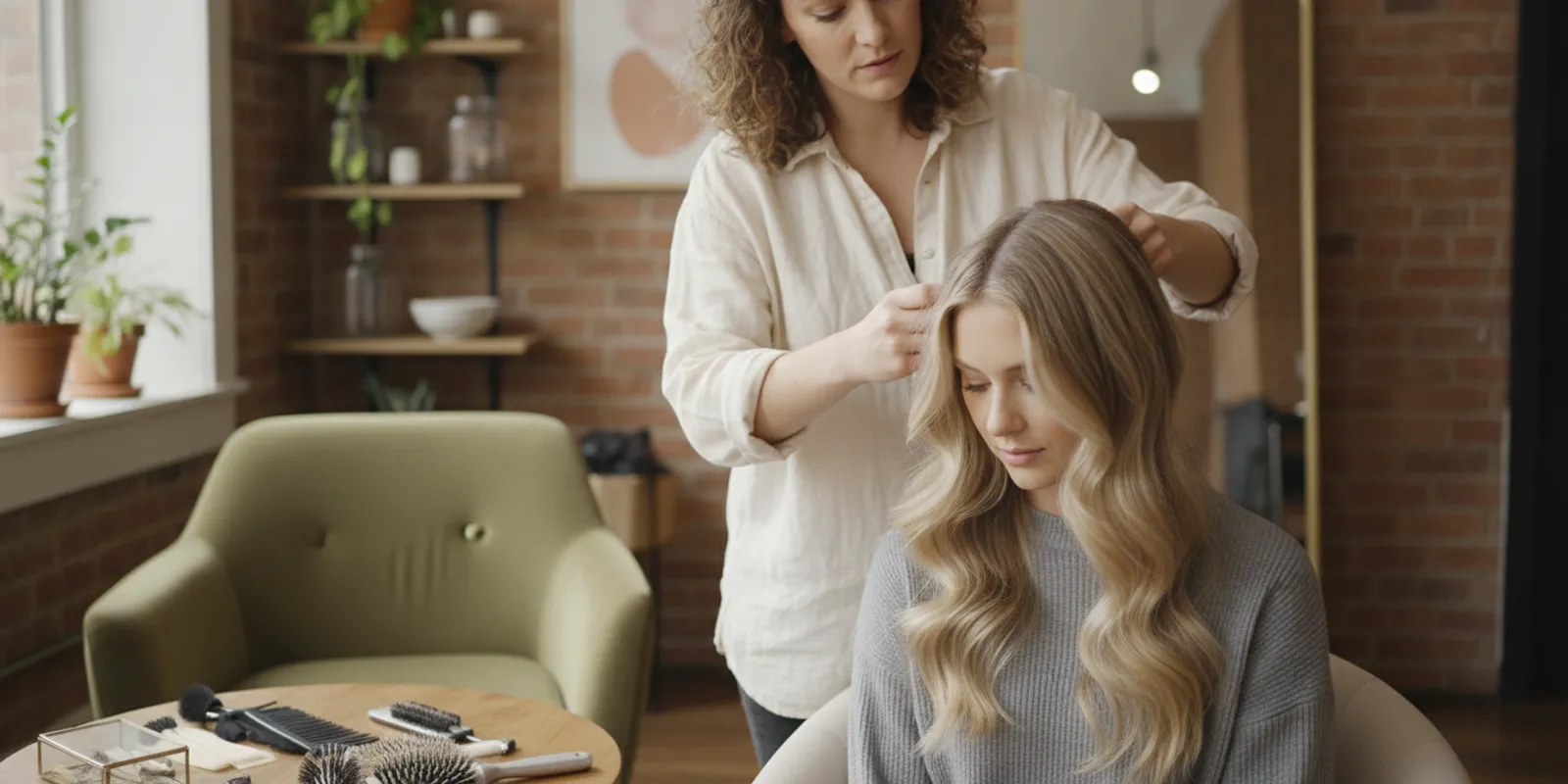
Consider a salon treatment when your goal depends on tone, your hair has a layered color history, or you simply do not want to manage the application on your own. A consultation lets you explain what is on your hair now, what you have done in the past, and what you hope to see. That conversation can also reveal when a gloss is not the right next step.
A professional visit may be especially helpful if you are transitioning between shades, have previously lightened or colored your hair, or are trying to address unevenness. Be ready to share details rather than relying on a single reference image. If you do not know the exact product or service used previously, say so. An honest account helps set expectations.
Boho Chic Beauty's Gloss + Tone and Gloss + Glow offerings give clients salon-based options to discuss. The service choice should follow the consultation, not a promise that either name means the same outcome for every person. Ask what the service is intended to do on your current hair, what it will not do, and whether another appointment or approach would be more appropriate.
For clients in Garwood, NJ, that conversation can happen through Boho Chic Beauty's personalized salon experience with Michele Dos Santos. If you are unsure whether a gloss fits your current color history, sharing that question before booking can help you choose a more informed next step.
For a sense of the salon's broader menu, review the hair and skincare services and the a la carte options. Service details can help you prepare questions, but the best fit still depends on your hair and the result you want.
A consultation is also a chance to set a useful boundary around the result. Describe what you would like to change and what you want to preserve, such as your current depth or the overall natural feel of your color. Ask the stylist to explain the options in plain language and to flag anything that may require a different service or a later appointment. It is reasonable to take time to decide if the recommendation or expected outcome is not clear to you.
How should you think about hair health and color risk?
Gloss" sounds gentle, but the name alone does not tell you what is in a product or how it will behave on your hair. Formulas vary. Your past color services, current condition, and the directions all matter. Treat any color-depositing or chemical product with care, even if it is sold for home use or described as a refresh.
A health-first decision starts with your actual hair, not only the ideal finish. If your lengths are dry or prone to breakage, adding another product without understanding its purpose may not be the right first move. If your scalp is uncomfortable or your hair condition has changed, pause and ask a qualified professional what to consider. For more background, read this guide to hair gloss and hair health. A salon conversation is not a substitute for medical advice about a scalp or skin concern.
For an at-home option, do not use more product or a longer processing time in pursuit of a stronger result. For a salon option, ask what steps are planned and mention sensitivities or concerns before the service begins. In both settings, clear communication and realistic expectations are better than chasing a fast correction.
If your question is really about a smoothing treatment rather than a gloss, make that clear before booking. These are different service categories. OSHA notes that some hair-smoothing products may contain or release formaldehyde during use; its guidance is specifically about smoothing products, not a blanket description of hair gloss. You can read the agency's hair salon facts about formaldehyde in hair products if you are evaluating a smoothing service.
It can help to separate three questions that often get bundled together: whether a product is suitable for your hair, whether it can create the appearance you want, and whether you are comfortable applying it. A product may be intended for a certain cosmetic effect but still be a poor match for your recent color history. The product may be a reasonable option, but the application process may feel too uncertain to do alone. Naming the concern makes it easier to decide whether to wait, seek guidance, or choose a different path.
What should you ask before choosing?
A few focused questions can turn a vague goal into a useful decision. Bring a current photo in natural light if that helps explain what you see, but also describe the history behind it. Reference photos are starting points for discussion, not promises of a matching result.
What is my current base color, and what previous color or lightening should I mention?
Am I looking for shine, a tone adjustment, or a larger color change?
Is an at-home product suitable for this goal, or would professional guidance be more appropriate?
What can a gloss reasonably change, and what will it not correct?
What should I avoid doing before or after the service?
What is the full service price and what does it include?
Price is part of the decision, but compare like with like. An at-home product price does not include professional assessment or application. A salon quote reflects a service, and the exact recommendation should be confirmed with the salon. Ask which service best matches your goal, whether pricing may vary with hair length or density, and what the quoted service includes before scheduling.
To compare options clearly, write down the total you expect to spend, the time you need to set aside, and what support you want. For home use, include the product and any supplies the directions require, and consider whether you are comfortable handling the steps yourself. For a salon visit, ask which service is being discussed, what it includes, and whether the proposed goal fits that service. This is not about assuming one route costs less in every case. It is about comparing the same needs rather than a product price against a service without context.
To help the conversation, you can read the clear hair gloss guide, review the Garwood hair services, or use the online contact form to ask a question. If you are deciding between home and salon care, sharing your goal in advance can make the appointment discussion more focused.
How can you prepare for a salon consultation?
- Describe the goal simply.
Say whether you want to maintain a tone, add a soft tonal finish, or address a concern. Avoid assuming the service can make a major color change.
- Share your hair history.
Include past color, lightening, glosses, smoothing services, and at-home applications, as far as you know them. Mention when you last used them.
- Bring useful context.
A photo of your current hair in natural light can help. A reference photo is useful too, but explain what part of it appeals to you.
- Ask about fit and limitations.
Find out which service is being considered, what it can reasonably achieve, and whether another approach or a later visit makes more sense.
- Confirm practical details.
Ask about the appointment length, price, and any preparation or aftercare directions before committing.
To make those steps easier, gather your information before the appointment instead of trying to remember everything in the chair. Note the products or services you recall and roughly when you used them.
If you have a box, receipt, or photo of a product label, keep it available. Do not worry if you cannot identify every past formula. Say what you know and where your memory is uncertain. A clear picture of the facts is more helpful than a confident guess.
When you bring reference photos, choose examples that show the tone or finish you like. Explain the specific feature you are pointing to.
One image may show a different starting color, lighting, or styling. Use it to describe your preference rather than as a promised result. A current photo in natural light gives a useful comparison point for the conversation.
This is a collaborative process. A good recommendation may be to proceed with a gloss, to choose a different service, or to wait until your hair is ready. The aim is an informed choice that suits your hair rather than a rushed promise.
Frequently Asked Questions
Can an at-home gloss fix hair color that looks uneven?
Do not assume it can. Products vary, and an uneven result may have more than one cause. Before applying another formula, check what the product is designed to do and consider discussing your color history with a stylist.
Is a salon treatment always better than an at-home gloss?
Not for every person or goal. A familiar at-home product may suit a straightforward maintenance choice when its directions match your needs. Salon guidance is useful when you need help assessing tone, have prior color history, or want a more supported decision.
Can I use a gloss after coloring my hair?
There is no universal answer for every product or color service. Follow the product label and any instructions given by your stylist. If you are unsure about timing or compatibility, ask before applying another formula.
Will a gloss make my hair a completely different color?
A gloss should not be treated as a guaranteed major color transformation. What it can do depends on the service or product, your starting hair, and its purpose. Discuss the specific goal before choosing an option. If timing is part of your decision, review this guide to how long gloss results last without treating a general timeline as a promise for every head of hair.
How do I choose between Gloss + Tone and Gloss + Glow?
Start by describing the result you want and the current condition and history of your hair. Ask what each service is intended to address, what it cannot do, and which one fits your situation. Confirm current service details and pricing directly with the salon.
How do you choose when comparing at-home hair gloss vs salon treatment?
Choose at-home hair gloss when the product's purpose is clear, your goal is modest, and you are comfortable following the instructions carefully. Choose a salon conversation when tone or history makes the decision less straightforward, or when you want someone to assess your hair before selecting a service. Either way, a measured plan and transparent expectations help keep the focus on healthy-looking hair that still feels like you.

Comments